Tianjin Homeowners: Must-Read Before Replacing Lock Cylinders – How to Choose Between A, B, and C Grades. Is a C-Grade Cylinder Really Safer Than a B-Grade One?
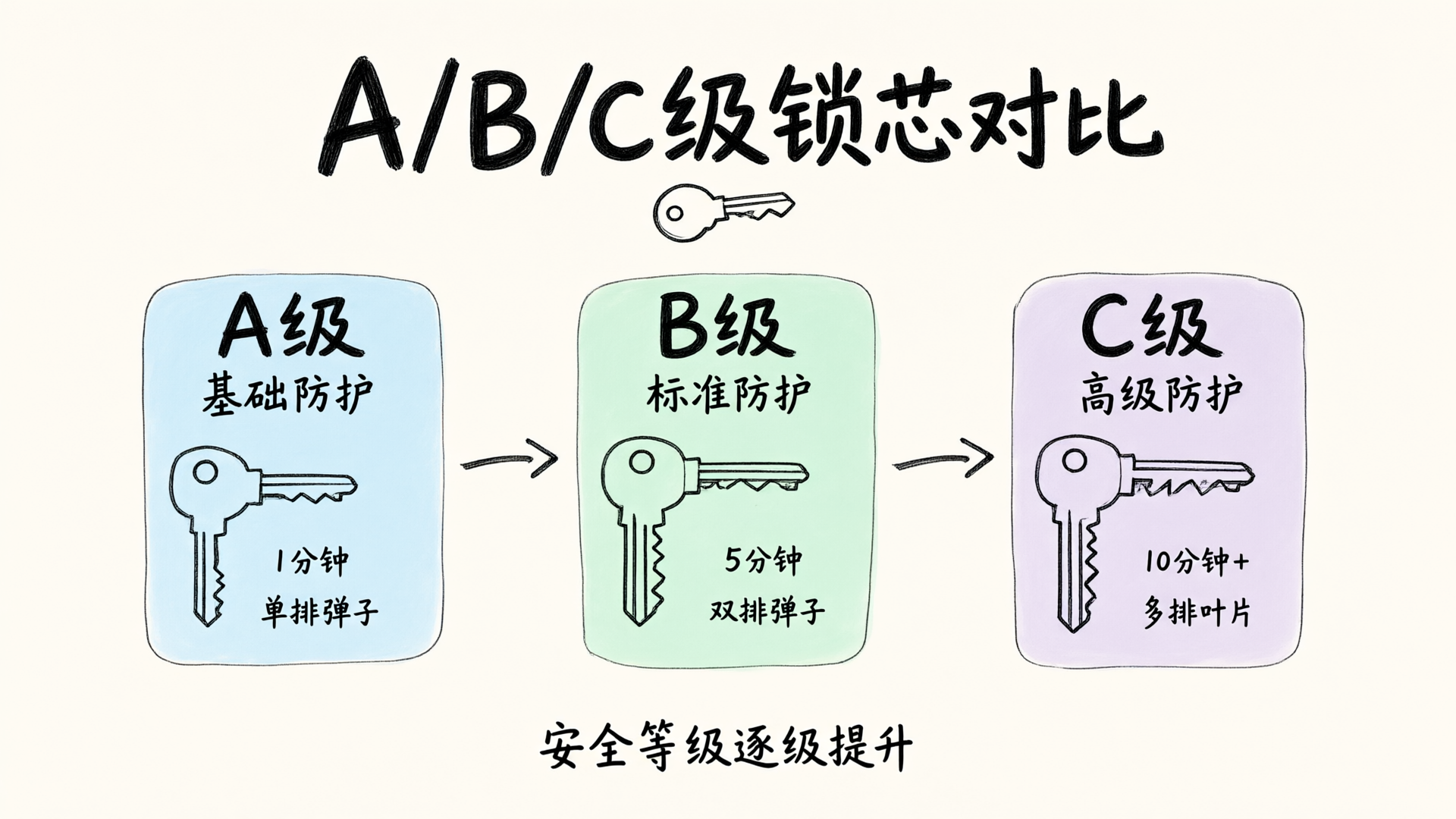
The security level of a home door lock directly determines its theft-deterrence capability, yet most homeowners remain unclear about the technical differences between Grade A, B, and C when replacing lock cores. After serving over 5000 households in Tianjin's 16 District, we found that owners' top two questions are: what exactly distinguishes these three grades, and whether Grade C cores are truly more secure than Grade B. This article breaks down the issue based on the national standard GA/T 73-2015 "Mechanical Security Locks," analyzing technical specifications, anti-picking resistance time, and suitable use cases across three dimensions.
National Standards and Technical Parameters for A/B/C Grade Lock Cores
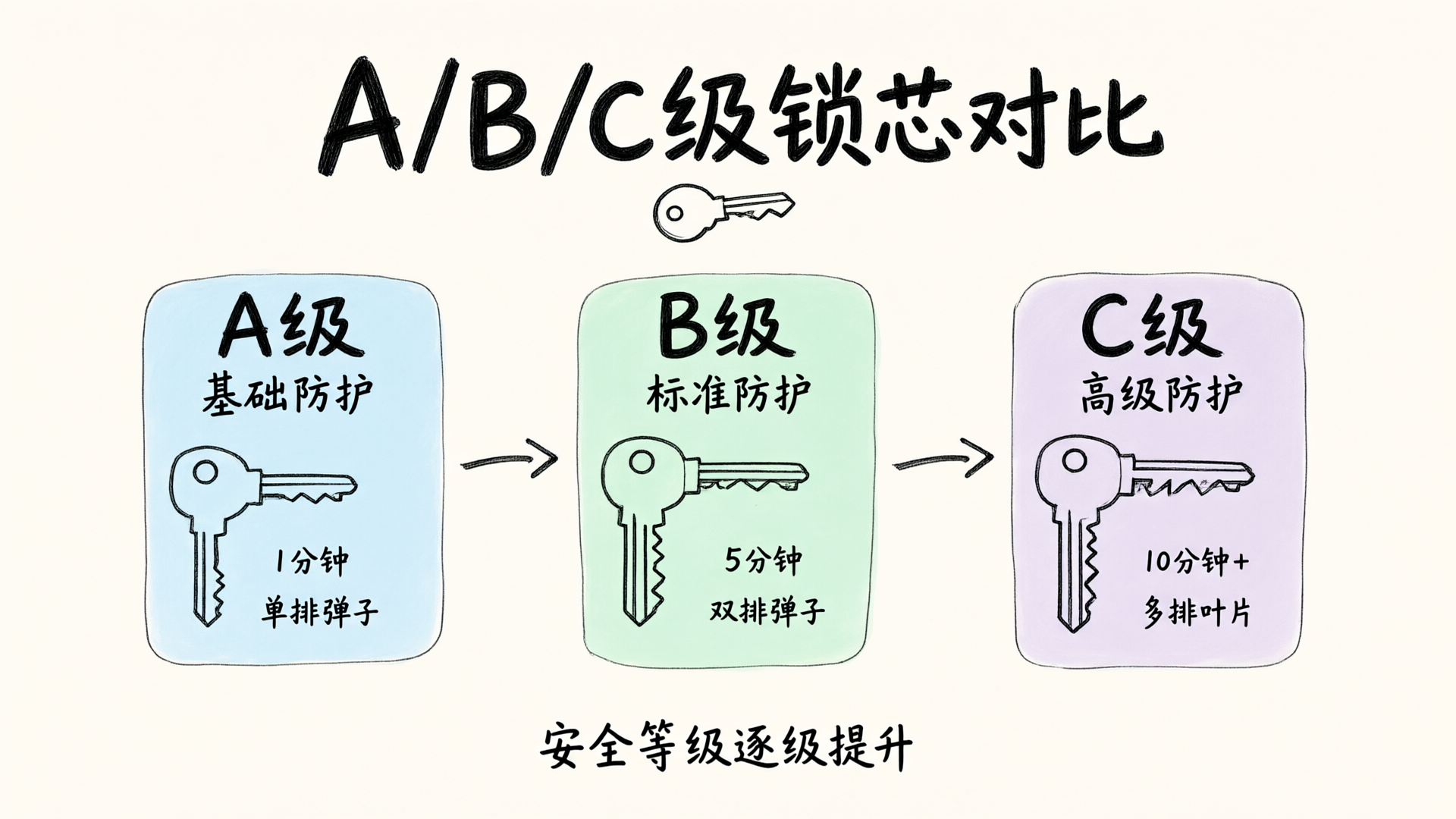
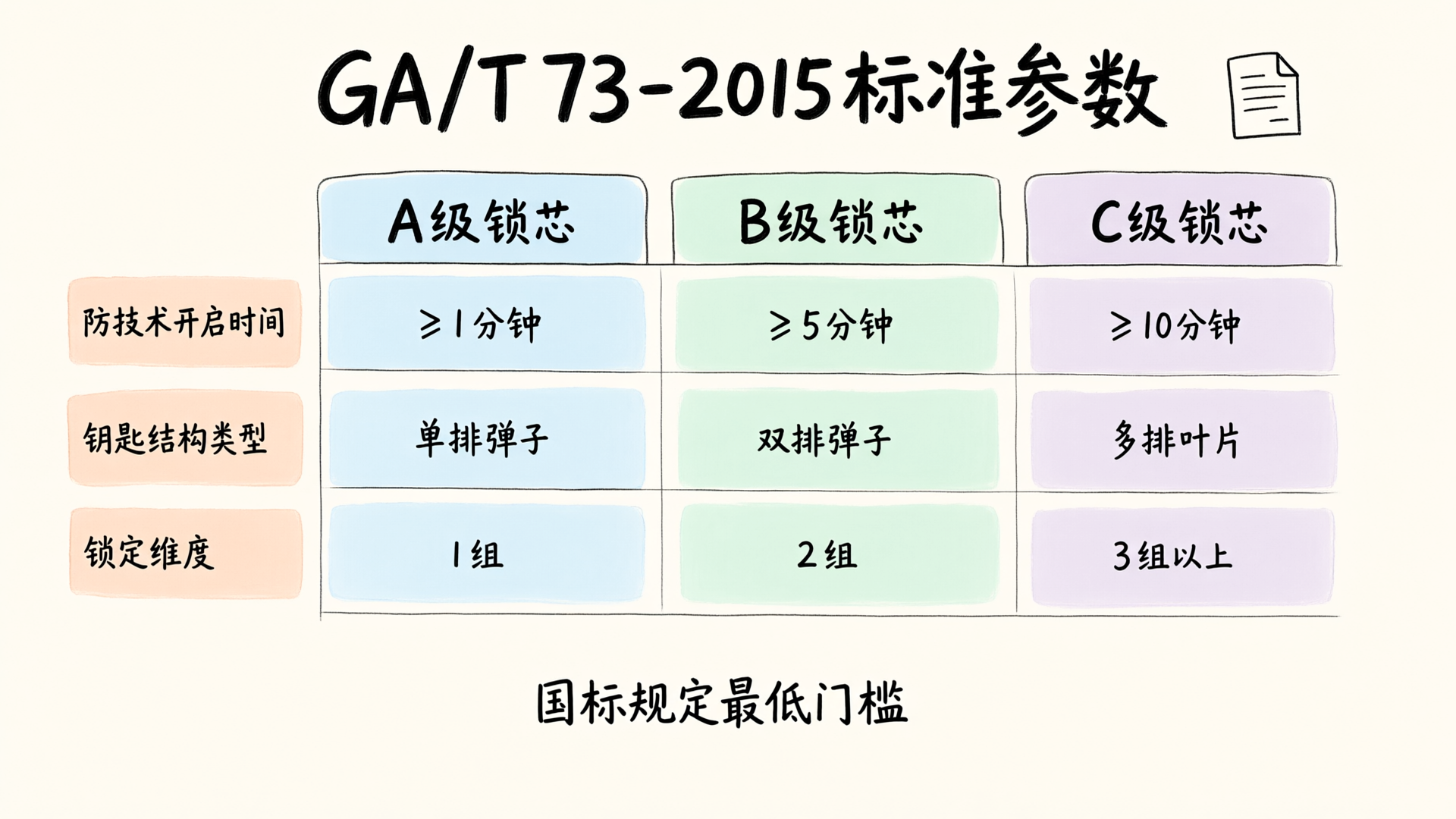
Chinese mechanical anti-theft locks comply with GA/T 73-2015 standards, which classify cylinder resistance to lock-picking into three grades: Grade A, Grade B, and Grade C. The primary criterion for classification is the time required for a professional tool to open the cylinder without damaging the lock body.
A-grade lock cores must resist technical picking for at least 1 minutes. They feature single-pin tumbler or cross-key structures and are the simplest in design. B-grade lock cores require a minimum of 5 minutes against technical picking, typically using double-pin tumbler or double-crescent key structures, offering significantly higher complexity. C-grade lock cores must withstand technical picking for at least 10 minutes (some enterprise standards exceed 270 minutes). They employ multi-pin tumblers, flat keys, or disc detainer mechanisms and represent the highest level of technical complexity.
Note that the standard defines minimum requirements; actual anti-picking performance depends on the precision of the lock core's internal structure, material hardness, and manufacturing quality. We have encountered products rated as Grade C but performing only at Grade B levels due to insufficient key pins or substandard material strength.
Why A-grade locks are no longer recommended
A-grade lock cores have the lowest technical threshold and offer the weakest anti-theft protection. Their single-row pin structure means only a one-dimensional locking mechanism inside, allowing professional tools to bypass them in seconds. Service records from multiple older communities in Tianjin show that entry doors equipped with A-grade cores were technically opened in an average of no more than 30 seconds during testing.
From a security ROI perspective, replacing an A-grade lock cylinder typically costs between 100 and 150 yuan, while a B-grade replacement ranges from 180 to 300 yuan. The price difference is not significant enough to justify skipping the upgrade. For homeowners in older buildings, those with inadequate hallway access control systems, or residents in areas with complex security environments, we strongly recommend upgrading from an A-grade to a B-grade or C-grade lock cylinder.
A-grade lock cylinders are primarily found in residential projects delivered before 2010 and in original configurations of some rental units. If the key has a single-row pin or cross-shaped design, it is likely an A-grade cylinder and should be prioritized for replacement.
Key Differences Between B and C Grade Lock Cores
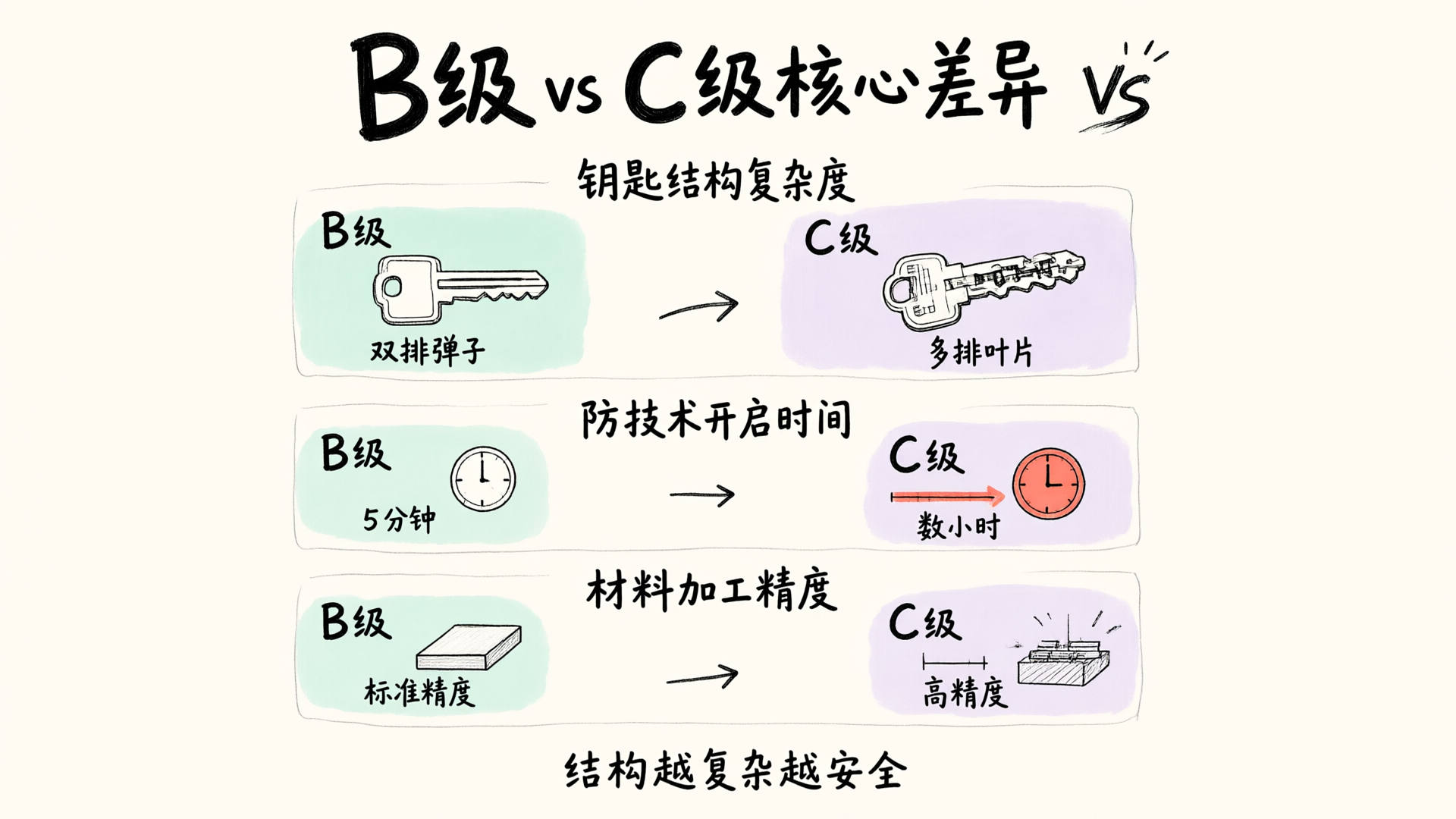
The difference between B-grade and C-grade lock cores lies in three aspects: key structure complexity, resistance to technical bypass time, and material quality with machining precision.
In terms of key structure, B-level cores typically use double-row pin or double-row crescent keys, with two sets of pin arrays involved in locking. C-level cores employ multi-row pins, blades, or false-turn mechanisms, achieving three or more internal locking dimensions. Taking blade cores as an example, the serrations on the key edge drive the internal blades to align one by one; blade counts usually range from 10 to 14, with a tolerance deviation of no more than 0.05 mm per blade. This design causes the difficulty of technical bypass to rise exponentially.
For technical attack resistance, the national standard threshold for Grade B cores is 5 minutes and for Grade C cores is 10 minutes. However, in actual tests, high-quality Grade C cores can resist attacks for several hours. Our 202024 sampling of mainstream brands in Tianjin showed that a certain brand's Grade C blade core withstood professional tool attacks for 270 minutes without being opened, while its Grade B core was breached within 8 minutes.
In terms of materials and machining precision, Grade C lock cylinders require higher standards for pin or leaf hardness, drill resistance of the cylinder housing, and wear resistance of the key material. This is directly reflected in pricing: in the Tianjin market, replacement costs range from 180 to 300 yuan for Grade B cylinders and 300 to 600 yuan for Grade C cylinders, with the price difference primarily driven by material and processing costs.
Is C-Level Lock Core Upgrade Worth It: A Scenario-Based Decision Guide
C-grade lock cores offer better security than B-grade, but C-grade isn't required for every scenario. Choose based on: neighborhood crime rates, your door's overall security rating, and budget.
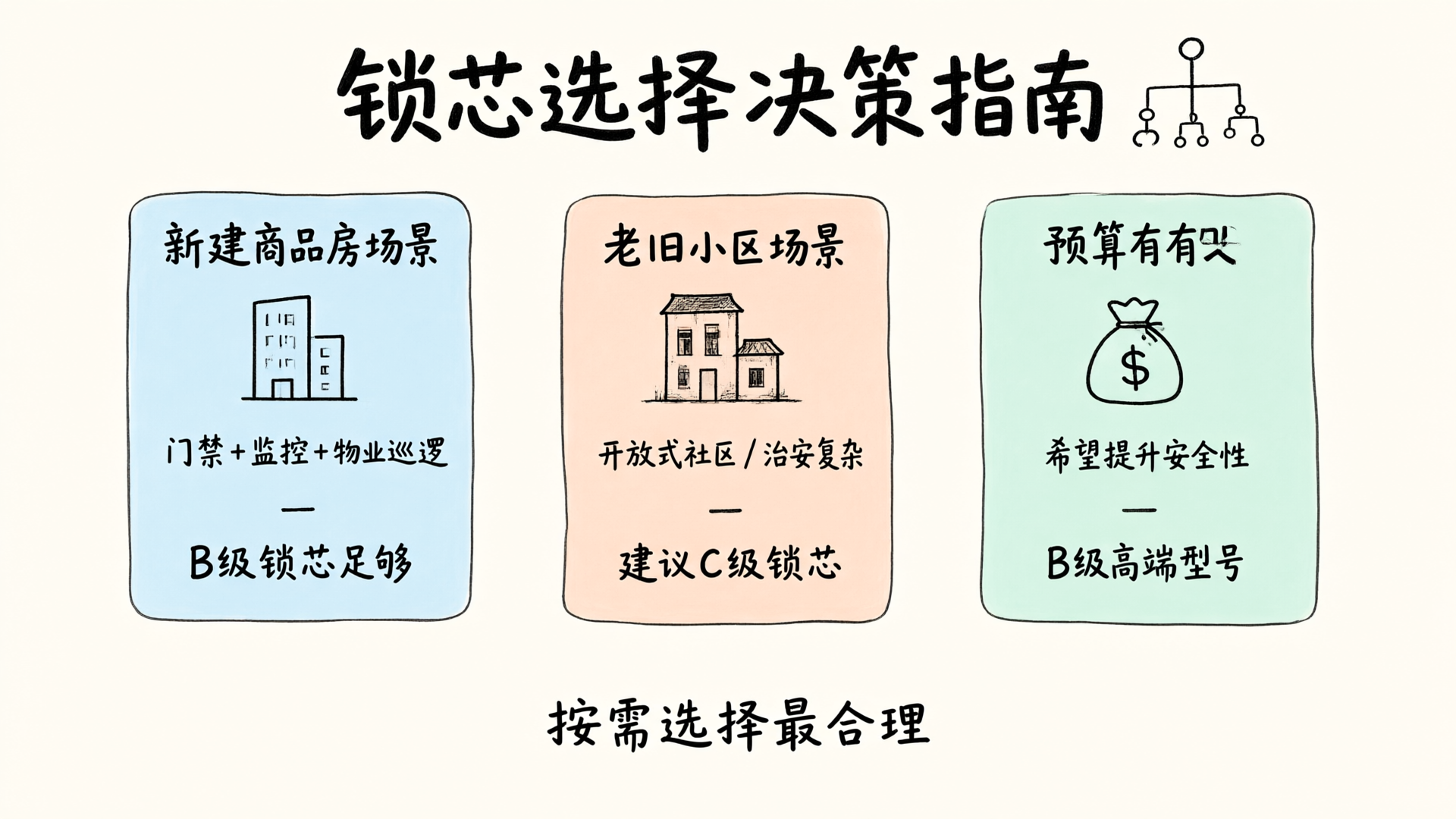
For newly built residential communities, especially mid-to-high-end complexes with access control systems, surveillance cameras, and security patrols, B-grade lock cores provide sufficient burglary protection. The community's public security infrastructure reduces the overall risk of break-ins; matching the lock core's security level to the community's security standards is adequate. Our construction records from multiple new developments in Heping and Hexi districts show that approximately 65% of homeowners chose B-grade cores, while about 35% opted for C-grade.
For older residential buildings, open communities, or areas with complex security environments, we recommend upgrading directly to a Grade C lock cylinder. In these scenarios, the entry door is the sole security barrier; the lock cylinder's grade directly determines household asset protection. The advantage of Grade C cylinders in resisting technical bypass attempts offers maximum value in high-risk environments.
For homeowners on a budget who want to enhance security, a smart compromise is to choose high-end B-level cylinder locks. Some brands use reinforced pins and strengthened housings in their B-level cylinders, offering anti-picking performance close to entry-level C-level locks at a price 30% to 40% lower. We've successfully implemented this solution in multiple projects in Nankai and Hebei districts, with positive feedback from homeowners.
Three Checks Before Changing the Lock Cylinder
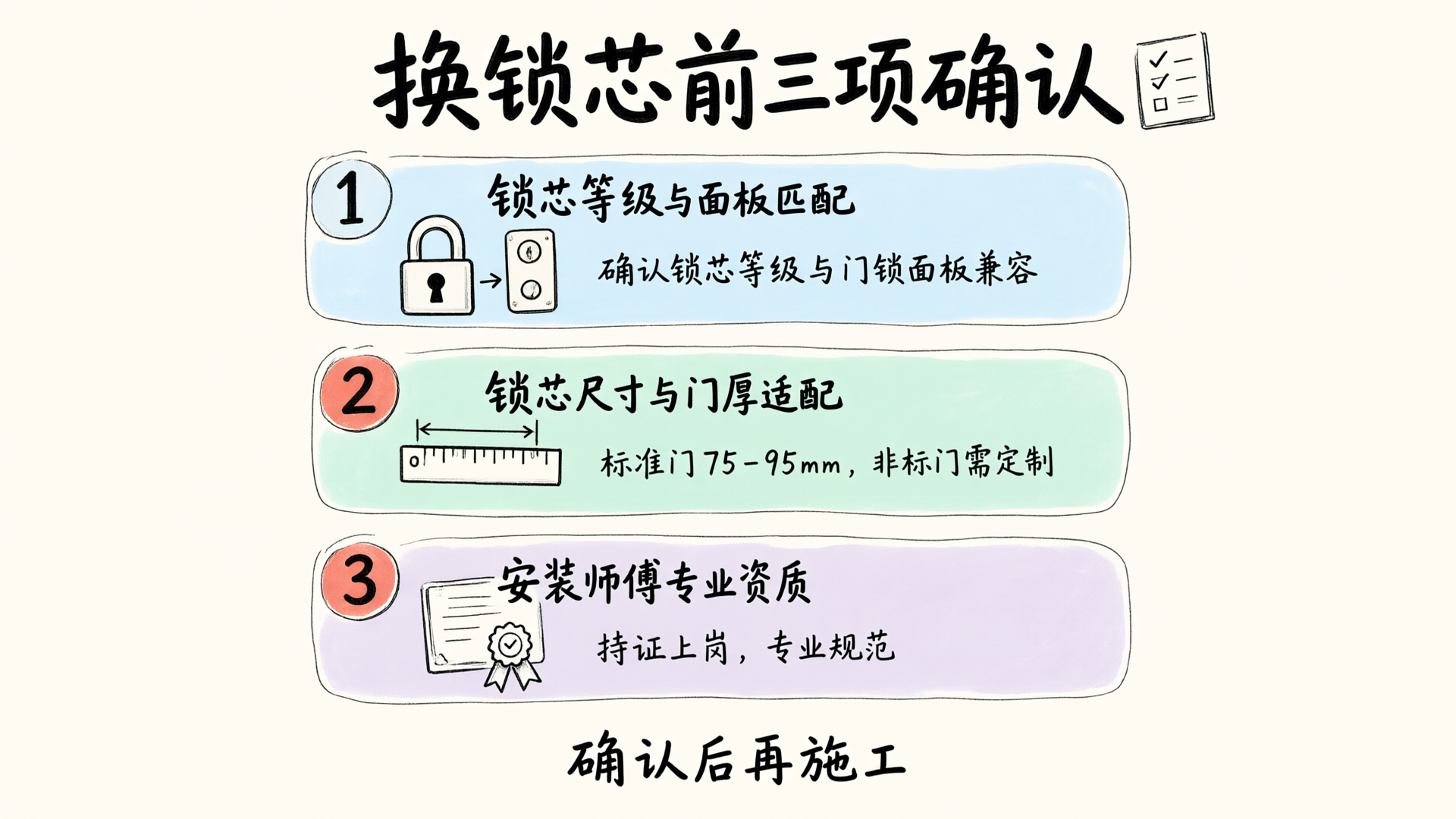
Before replacing the lock cylinder, homeowners must verify three things: whether the cylinder grade matches the door faceplate, if the cylinder size fits the door thickness, and whether the installer is professionally qualified.
Matching lock cylinder grades to door panel models is critical, as some older panels cannot accommodate C-grade cylinders. Forcing an upgrade may cause poor fit and alignment. During installation, we first verify the door panel model to ensure compatibility before recommending the appropriate cylinder grade.
Lock cylinder length compatibility with door thickness is a technical detail. Standard security doors typically use cylinders ranging from 75 to 95 mm; custom sizes are required for non-standard or reinforced doors. Mismatched dimensions can cause the cylinder to protrude or sit recessed, affecting proper operation.
The professional qualifications of the installer directly impact how well your lock cylinder performs. Proper installation involves removing the lock body, positioning the cylinder, tightening screws, and testing keys—any mistake in these steps can compromise security. Our certified technicians are stationed in Tianjin's 16 district. We provide a single upfront quote before arrival. Cylinder replacement starts at 100 yuan, with the nearest technician arriving within 8 minutes. Call 18222551707 for pricing and scheduling details.
Choosing a lock cylinder grade is about balancing security needs with budget. A-grade cylinders are no longer recommended. B-grade suits communities with good public safety, while C-grade is ideal for high-risk scenarios or homes requiring enhanced security. Before deciding, verify cylinder-door compatibility, size fit, and professional installation requirements—these factors matter more than simply choosing the highest grade.